
The Best Time to Aerate Your Lawn
Summary
The best time to aerate your lawn is during its active growing season, when the grass can recover quickly after aeration. For cool-season grasses, early fall is generally the best time, while warm-season grasses are typically aerated in late spring or early summer.
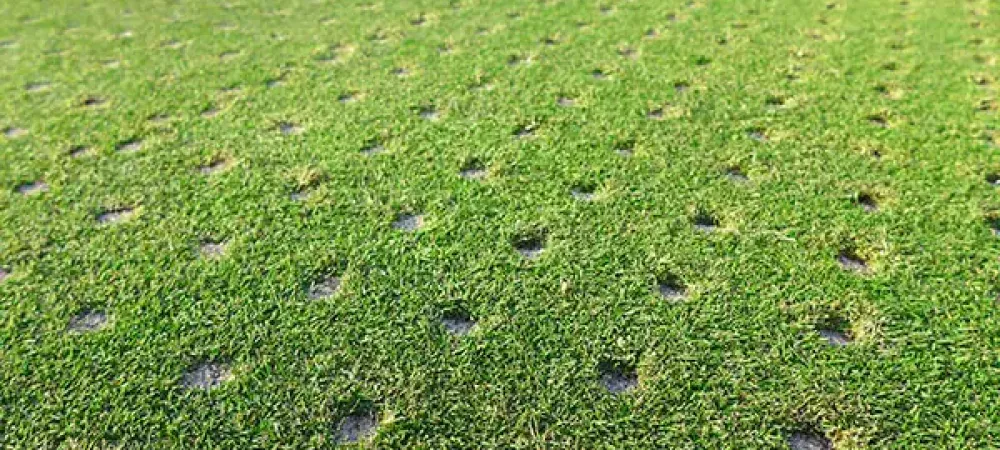
Compacted soil can make it harder for grass roots to access the air, water, and nutrients they need. Core aeration helps relieve that compaction by removing small plugs of soil from the lawn, creating temporary openings that allow resources to move more easily into the root zone.
Timing matters, though. Aerating while your grass is actively growing gives the lawn a better opportunity to recover and take advantage of the improved soil conditions.
When Is the Best Time to Aerate Your Lawn?
The best time to aerate your lawn depends primarily on the type of grass you have. Aeration should generally take place during the grass's active growing season rather than when it is dormant or under significant stress.
For the two major turf categories:
- Cool-season grasses: Early fall is generally the best time to aerate
- Warm-season grasses: Late spring through early summer is usually more appropriate
Cool-season grasses such as tall fescue and Kentucky bluegrass grow most actively during cooler portions of the year. Warm-season grasses such as bermudagrass and zoysiagrass perform most of their growth during warmer weather.
Matching aeration to those growth cycles allows the lawn to recover more quickly after soil plugs are removed.
Why Fall Is the Best Time to Aerate Cool-Season Lawns
Early fall is often the ideal aeration window for cool-season turf because temperatures are becoming more favorable while the grass is entering another period of active growth.
Aerating during this period offers several advantages:
- Grass can recover before winter dormancy
- Roots have time to grow into newly opened soil
- Cooler temperatures place less stress on the turf
- Soil often has enough moisture to allow effective core removal
- Aeration can be coordinated with other fall lawn treatments
Fall also tends to provide better conditions than midsummer, when heat and drought can already be stressing cool-season grass.
Can You Aerate Your Lawn in the Spring?
Spring aeration is possible, but it is not always the preferred time for cool-season lawns. Fall generally provides a better recovery period and avoids some of the challenges associated with spring weed germination.
Aerating creates openings in the soil, which is helpful for the grass but can also provide opportunities for weed seeds to germinate. This can be particularly relevant during the spring when annual weeds such as crabgrass are beginning their growth cycle.
There are situations where spring aeration may still make sense, particularly if soil compaction is severe. However, lawns that can wait until fall will often benefit from scheduling aeration during that stronger cool-season growth period.
When Should Warm-Season Grass Be Aerated?
Warm-season grass should generally be aerated in late spring or early summer once it is actively growing. Aerating during this period gives the turf plenty of warm weather ahead to fill in the temporary openings created by the process.
Warm-season lawns should not typically be aerated shortly before they enter dormancy. The grass may not have enough active growth remaining to recover as effectively before cooler temperatures arrive.
Regardless of grass type, the basic principle is the same: aerate when your lawn is actively growing, not when it is dormant or severely stressed.
How Do You Know If Your Lawn Needs Aeration?
Not every lawn needs aeration on exactly the same schedule. Soil conditions and how the property is used can affect how quickly compaction develops.
Signs that your lawn may benefit from aeration include:
- Water pooling or running off instead of soaking into the soil
- Thin or weak areas of grass
- Hard soil that is difficult to penetrate
- Heavy foot traffic
- Frequent activity from children or pets
- Vehicle or equipment traffic across the lawn
- Areas that struggle despite regular watering and fertilization
Clay-heavy soils are also more prone to compaction than looser soils, which can make routine aeration particularly useful.
How Often Should You Aerate Your Lawn?
Most lawns do not need to be aerated multiple times each year. For compacted lawns or properties with heavier soils and frequent traffic, annual aeration may be beneficial.
Lawns with loose soil and minimal compaction may need aeration less frequently.
The condition of the soil is more important than following a rigid schedule. If grass is growing well and the soil is not compacted, aerating simply because another year has passed may not be necessary.
Should You Aerate Before or After Overseeding?
Aerating immediately before overseeding can be especially beneficial for cool-season lawns. The holes created during core aeration provide additional areas where seed can make contact with the soil.
That is one reason aeration and overseeding are commonly performed together in the fall.
A typical sequence includes:
- Mowing the lawn if needed
- Core aerating the soil
- Overseeding thin or bare areas
- Applying any appropriate soil amendments or fertilizer
- Watering consistently while new grass becomes established
Combining these services allows you to address soil compaction while also improving turf density.
Should the Soil Be Wet Before Aeration?
The soil should be slightly moist when the lawn is aerated, but it should not be saturated.
Dry, hard soil can make it difficult for an aerator to remove deep cores. Extremely wet soil, on the other hand, can become muddy and may be more susceptible to additional compaction from equipment.
Watering the lawn a day or two before aeration may help if conditions have been especially dry. Recent rainfall may provide enough moisture without additional irrigation.
What Should You Do After Aerating Your Lawn?
After aeration, leave the soil plugs on the lawn rather than raking them up. They will gradually break apart through mowing, rainfall, irrigation, and normal lawn activity.
The period immediately after aeration is also a good opportunity to support the lawn's recovery. Depending on your lawn's needs, this may include overseeding, fertilization, and proper watering.
Avoid excessive traffic while newly seeded areas are establishing, particularly if aeration is being performed as part of a larger fall lawn renovation.